

1. What Georgians Eat for Easter
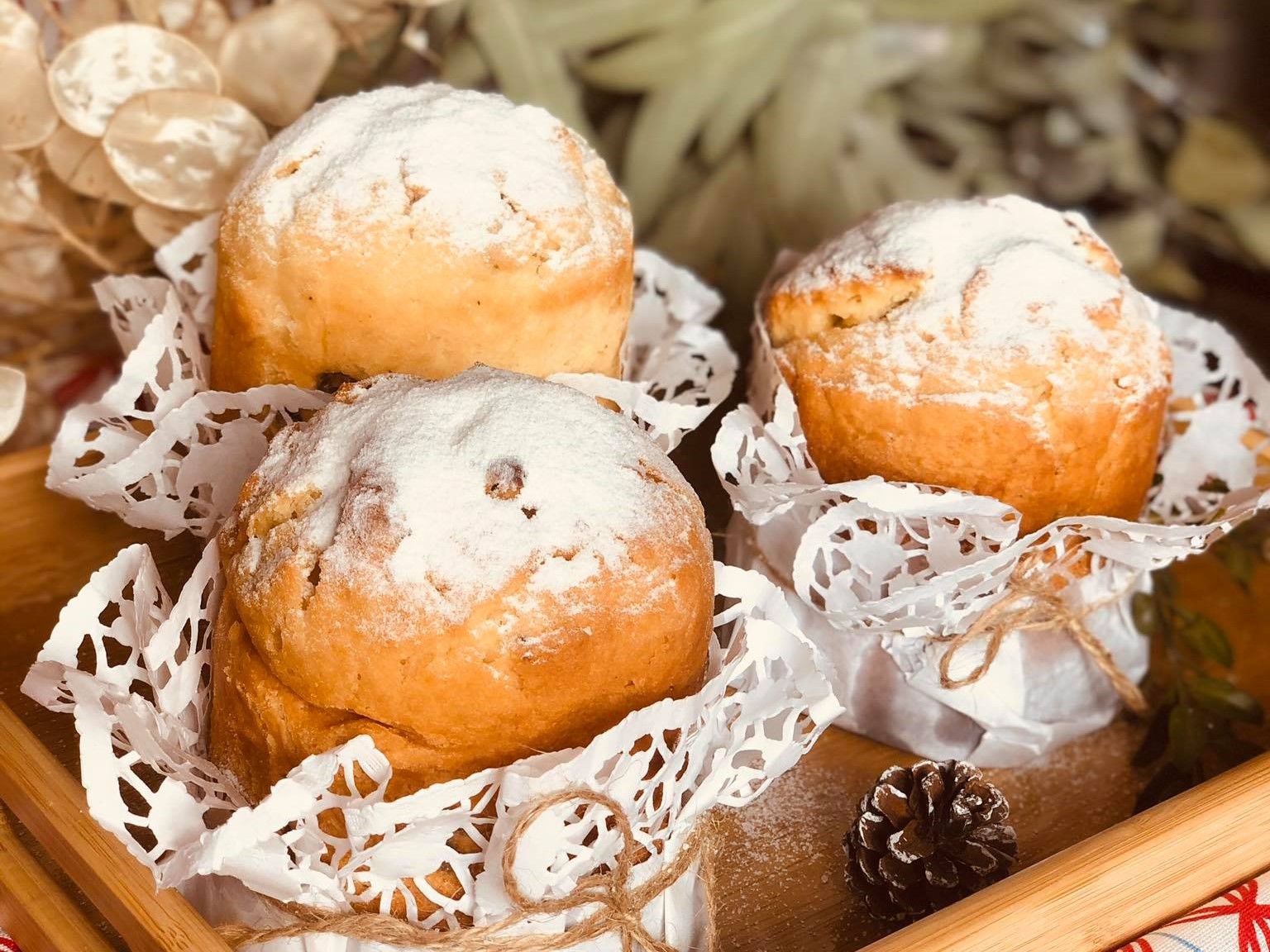
Easter in Georgia is closely tied to symbolic food traditions, with red-dyed eggs being the most recognizable element. These eggs represent new life and are traditionally cracked together in a playful ritual among family and friends, along with the phrase: “Christ is risen” (ქრისტე აღსდგა), „Truly he is risen“ (ჭეშმარიტად). Another essential part of the Easter table is Paska, a sweet, tall bread often decorated with crosses and shared during meals. Together, these simple yet meaningful foods reflect the spirit of renewal and celebration that defines Georgian Orthodox Easter.
2. Georgian Easter Decorations
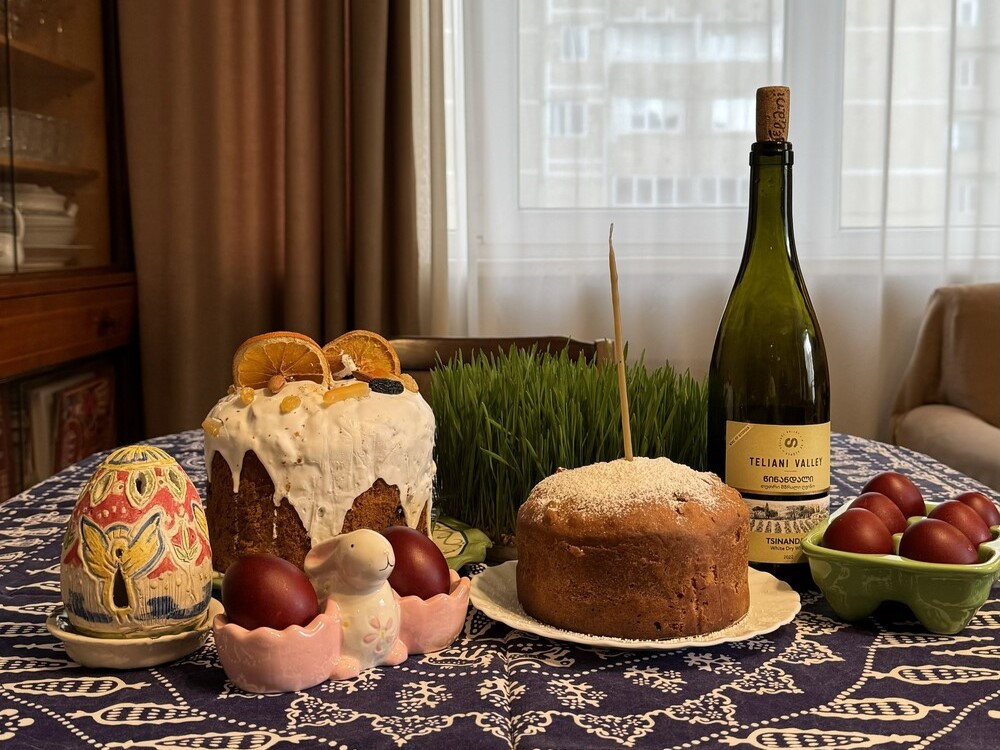
Georgian Easter decorations are quite simple, yet deeply meaningful, reflecting a strong sense of spirituality and tradition in Georgia. Families often use sprouted wheat, a powerful symbol of new life, renewal, and resurrection, which is carefully grown in the days leading up to Easter. Alongside this, boxwood branches are used instead of palm, representing everlasting life and faith. These natural elements not only carry religious symbolism but also highlight a deep connection to nature and centuries-old customs.
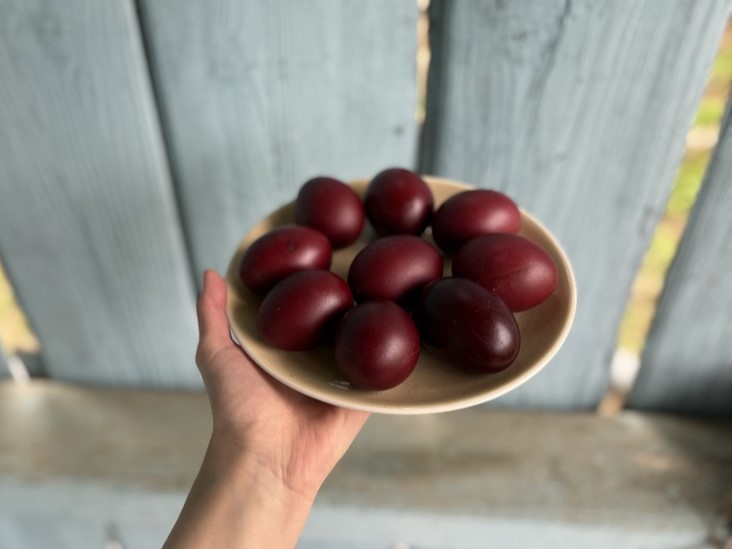
Homes are typically decorated in a modest and elegant way, with an emphasis on meaning rather than excess. Tables may feature red-dyed eggs, symbolizing the blood of Christ and rebirth, arranged with greenery and traditional foods. Candles are often placed at the center, representing light and hope. Overall, Georgian Easter décor creates a calm, reverent atmosphere, where every detail serves as a reminder of faith, renewal, and the joy of the resurrection.
3. Orthodox Traditions
In the Eastern Orthodox tradition, Easter is not associated with figures like the Easter Bunny or activities such as egg hunts. Instead, it is observed as a deeply spiritual and sacred celebration, particularly in Georgia. The focus is on faith, reflection and community, with most people attending church services during Easter. Many worshippers remain in church throughout the night, taking part in the Easter vigil, a solemn and moving service that leads up to the joyful proclamation of the Resurrection.
4. Fasting
In the forty days leading up to Easter Sunday, devout Georgians observe a period of fasting known as Lent. During this time, they abstain from meat, dairy and other animal products, using the fast as an opportunity for spiritual cleansing, prayer and self-discipline. This period of restraint ends after the midnight service, when families return home in the early hours of Easter morning to break the fast together with a traditional meal.
5. Honoring the Ancestors
The observance of Easter also extends beyond Sunday. On the Monday following the holiday, it is customary for families to visit cemeteries to honor and remember their deceased relatives and loved ones. They bring red eggs and traditional foods, sharing them symbolically in remembrance. This meaningful tradition reflects a deep respect for ancestors and highlights the enduring connection between past and present generations
6. Holy Fire
The Holy Fire is one of the most sacred Easter traditions in the Church of the Holy Sepulchre in Jerusalem. On Holy Saturday, Orthodox Christians believe that a miraculous flame appears inside the tomb of Jesus Christ. The Patriarch lights candles from this flame and shares them with thousands of pilgrims gathered in the church. From Jerusalem, the Holy Fire is carefully transported by special flights to many Orthodox countries, including Georgia. In Georgia, clergy bring the flame to churches across the country, where it is used to light candles during the Easter night service. For many believers, receiving the Holy Fire symbolizes the light of Christ’s resurrection and the spread of hope and renewal.
Easter in Georgia is a quiet yet powerful celebration, centered on faith, reflection and meaningful traditions passed down through generations. From the sacred light brought from Jerusalem to the simplicity of natural decorations and the discipline of fasting, every element carries a deeper spiritual significance. The night-long service, the joyful breaking of the fast and the remembrance of loved ones all come together to create a sense of unity between past and present, the living and the departed. In its simplicity and sincerity, Georgian Easter reflects the true essence of renewal, hope and resurrection.